
A woman in Naples, Italy, scratched her ‘gratta e vinci’ lottery card and turned it over to the tobacconist to cash it in. By golly, she’d hit the jackpot! But opportunity makes the thief and the man behind the counter just went plumb crazy when he saw the figure of 500,000 euros staring up at him. Grabbing the card for himself, the miscreant jumped onto his motorbike and was caught a day later trying to leave the Rome airport with a one-way ticket to Fuerteventura.
Fuerteventura, just south of Lanzarote – a place I knew! The scofflaw must have seen a picture of an exotic landscape in the dusty window of a travel agency. Did he think that the date palm trees and sharp black rocks would make a good robber’s roost? Well, he was clearly oblivious to the fact that despite all appearances, he would still have been in Europe. Just a deserty outpost of the European Union. And that’s a fact.
Now, what are we talking about, anyway?
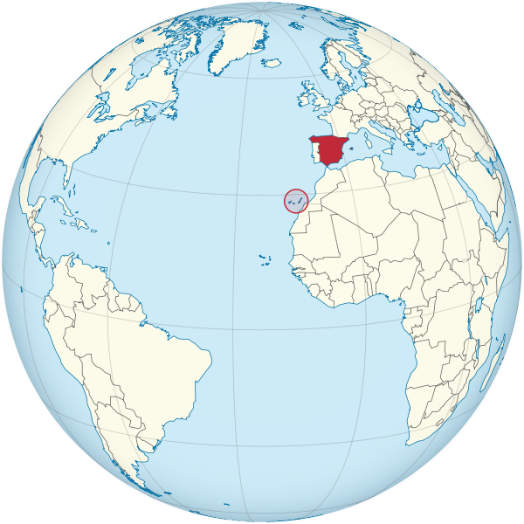
The Canary Islands, of course. There they are, nestled together, if volcanoes do such gentle things as nestle, right off the coast of Morocco. The tobacconist can be forgiven for his geographical ignorance, if nothing else. How could these bits of Macaronesia, the volcanic archipelagoes of the North Atlantic, still be part of a continent they’re not even close to? That’s a long, old story, similar to many others.
I clearly haven’t finished with my island obsession. When I started writing this, I was confined again. Laid up with Covid19 itself, finally, in the summer of 2022. So there I was in the sweltering heat of northern Italy, wondering why I had stopped wearing my mask as diligently as before, trying not to collapse over my computer, and dreaming of a water-lapped land of explosive mountains, where the trade winds always blow. Outlandish Lanzarote, or Tyterogaka, the only Canary I have laid eyes on, looks as if it should be hanging up in the sky next to another planet. But it’s of this earth, actually, and also very much under this earth, with its legs planted firmly in the sea. There it is, hiding in plain sight.

Hiding, I say, because the islands were ‘forgotten’ for a long time. Probably originally settled by climate-change immigrants from North Africa, they were then colonized by the Carthaginians, then found and forgotten by the Romans – who called them The Fortunate Isles – then briefly found and forgotten by the Arabs, forgotten by all but the first pioneers, the Guanches (or Majos on Lanzarote itself), who then almost forgot their cousins on the neighboring isles. They were living there, cut off from the world for centuries, until first contact was made with the increasingly aggressive continent to their north. The year was somewhere around 1312, and the contact went by the name of Lanzarotto Malocello, from Genoa. Genoa, yes, just a small Italian maritime republic, and a producer of ambitious mariners. Life could be very short, so adventure on a small boat on the high seas wouldn’t have been such a crazy idea. Why not see something of the world, like Ulysses, or make a profit, whether by hook or by crook, trade or plunder, before succumbing to whatever plague was roaming around in your century?

We live in different times now, and adventure is synonymous with fun. Other sorts of journeys have different names attached to them.
So in that modern-day spirit of ‘adventure’, during the summer of 2021 my Italian sun-and-water loving friends exhorted us to go and stay at an eco-hotel (Mana Eco-Retreat, manaecoretreat.com), on Lanzarote set up by a young couple they knew. “Let’s help them out, hard times…just pack your vaccination certificate and a swimming suit!”

In recent years I’ve become fond of Josè Saramago, the Nobel-prize winning author. One of his publications is Notebook from Lanzarote, where he settled after censorship issues with his homeland, Portugal. I leafed through the book and stopped short at a sentence about his adopted residence. Something to the effect that although Lanzarote had a menacing sort of appearance, it also exuded a “feminine sweetness”, the kind that Lady Macbeth might have shown when she was asleep. Lady Macbeth! Why hadn’t I read that before? The terrain around Las Brenas (near Yaiza), where we were staying, down slope from the grand volcano of Timanfaya, looked so grim even while slumbering that it resembled all those paintings I’d seen of Hell. Was this really what one would call a vacation destination?

After all, I’m not a beach lizard. I’m more of a woodsy, and mountain and museum-loving person. But that’s not what we had decided to do as a group. Our focus was resting and relaxing in the water or at the table.
We couldn’t not head up the closest peak, though, up through the Timanfaya National Park, to the top of the caldera, on a guided bus tour. This is the best way to access the park on its one narrow road, unless you plan to hike in and out on a single path, reserving ahead. Because you can’t actually do any walking around on your own. This is just as well, considering the very delicate ecosystem you are treading on, which could also suddenly come alive and thus become as murderous as Medea bent on revenge! That’s exactly what Timanfaya did in the 1730s, burying villages, sending out lava and ash, and emigrants away from the very ‘unfortunate’ island. Lanzarote betrayed her people once again.
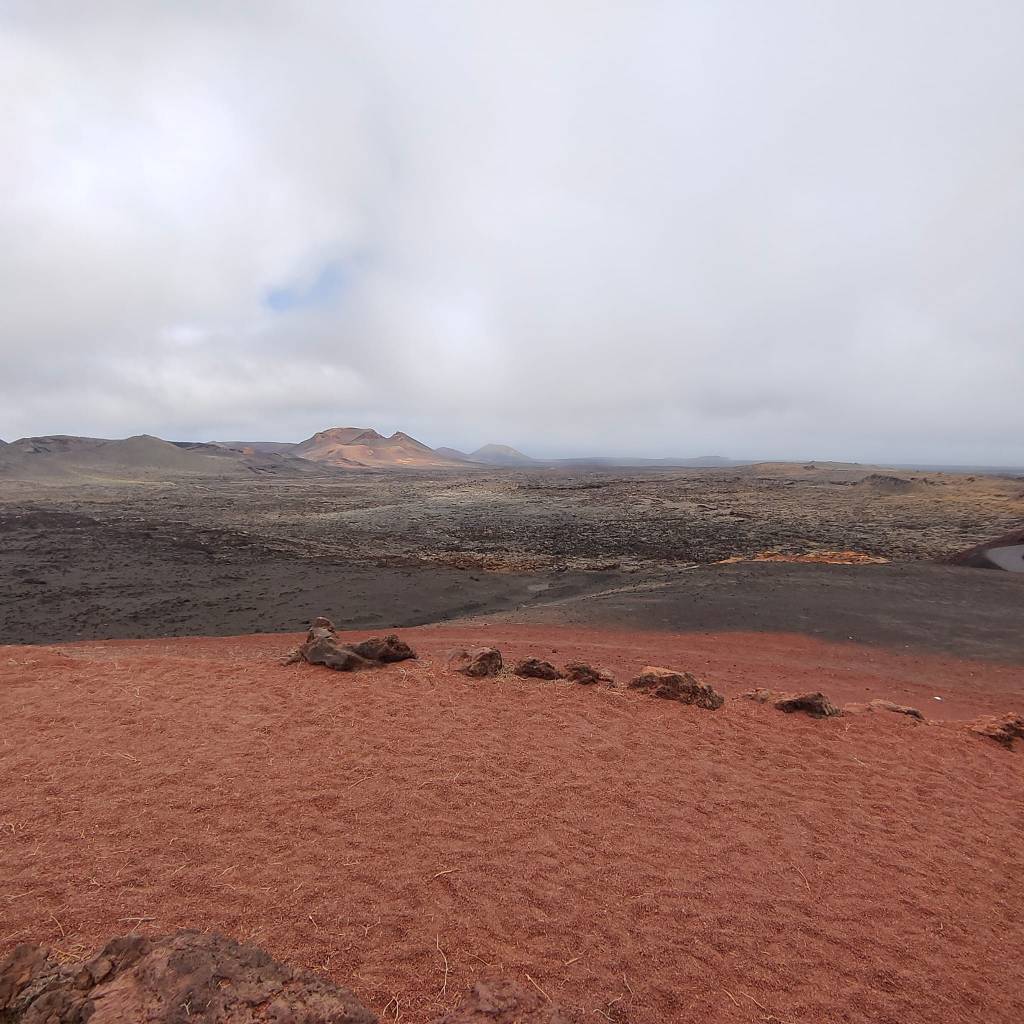
But now some immigrants are coming back, as the Ladies are dormant. The local Spanish apparently sounds as if it came from the Caribbean rather than Castile. And our young hosts had given up jobs in finance in Amsterdam, with all its cold and damp, to strike out on their own in a gusty but also decidedly sunny corner of the Atlantic.
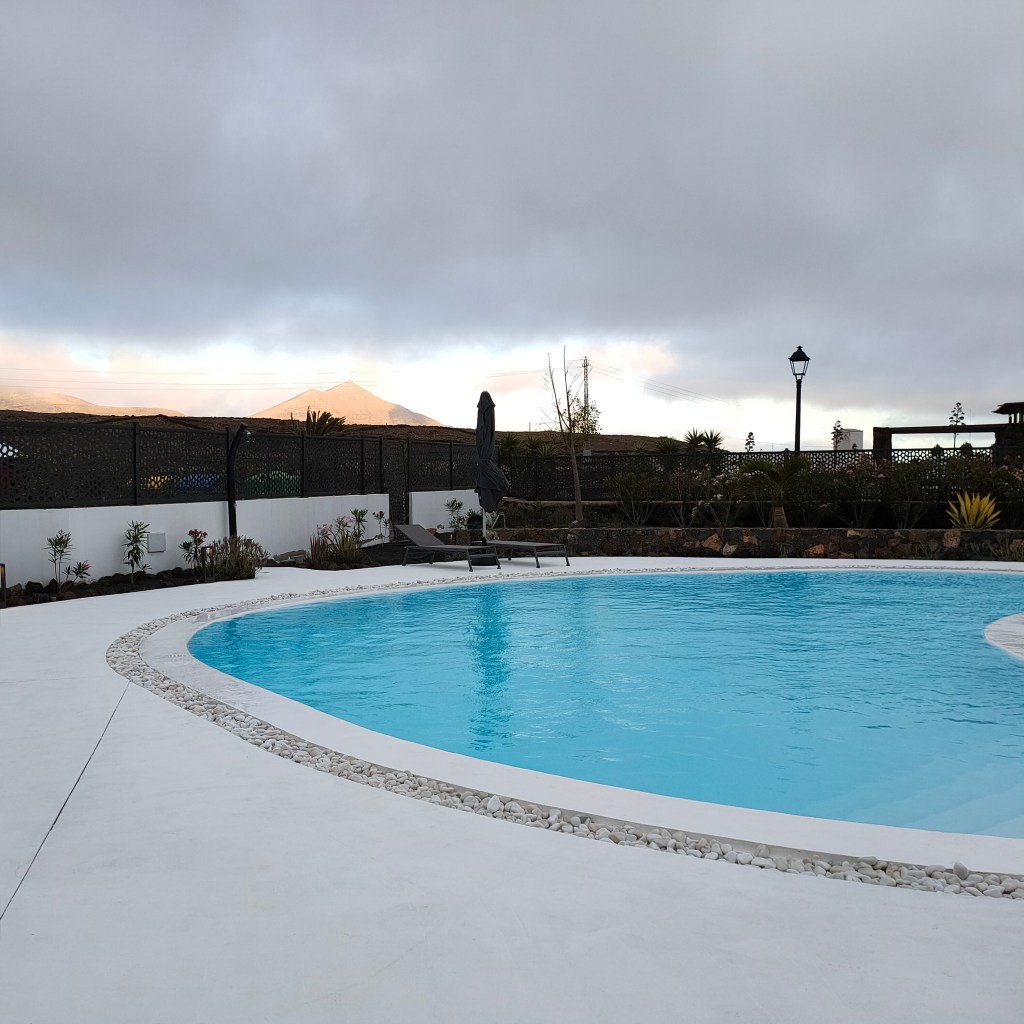
Is that what the first Europeans thought when they came adventuring here? Try to make a living in a location where it can be spring year round? Where you have to wear a sweater in the evenings even in July? That was true in 2021, anyway…
Lanzarotto spent a few decades hanging out on what he discovered, and built a castle. Then along came a Norman, Jean de Bethencourt, in 1402, backed by the Spanish crown and the Catholic Church. He found a population with a king and queen but no weapons to match his own. A member of his family married the royal princess, Teguise. Sound familiar?
The Guanches/Mayos were decimated. Naked, treeless Lanzarote became a trap. Her inhabitants were enslaved or killed en masse after rebelling. Their bloodlines must be there, among the descendants of the survivors, but their language is remembered above all in the local nomenclature. Teguise, for example, lives on as the name of the loveliest town on the island.
The Canary Islands came into being when the landmasses later known as Africa and the Americas broke apart. But the Canaries then became key to bringing those continents closer together in more ways than one. The conquest of these stark mountaintops sticking out of the water was a dress rehearsal and also a boon for future Spanish endeavours . Those harbors at the corner of the quandrant Europe – Africa – the Caribbean – North America – Europe – helped sea-farers get across the wide Atlantic, as a matter of fact. Columbus stopped there, and then took advantage of those famous trade winds, oh yes, to go west. Lanzarotto had bumped into a stepping stone which would lead the way to fabulous gains and cataclysmic losses.
I read these things while listening to my beach towel flapping furiously on the drying rack outside my window. We’d had a large lunch, with calamari, patatas rugas, and plenty of local white wine. Well, we were so relaxed we were becoming catatonic. But I was determined o find out more about this weird and intriguing place that had been so hard on many of its human inhabitants.

We went on a afternoon constitutional around the neighborhood to take in our bleak surroundings.

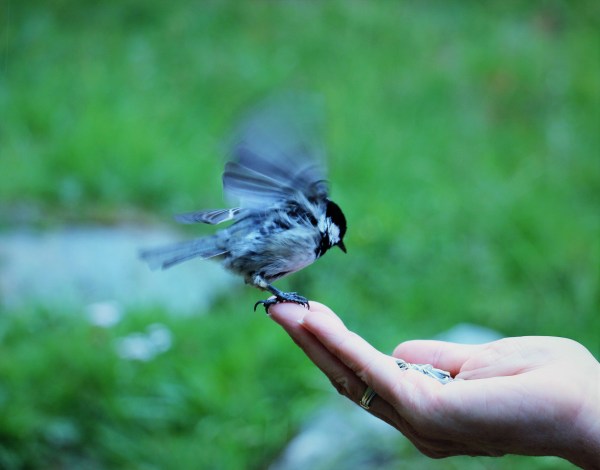
Then a bird flew overhead. What was it, a falcon? A Barbary falcon, which is a type of Peregrine found in North Africa? It was clear that addictive feathered creatures were going to drag us away from human history for a while.
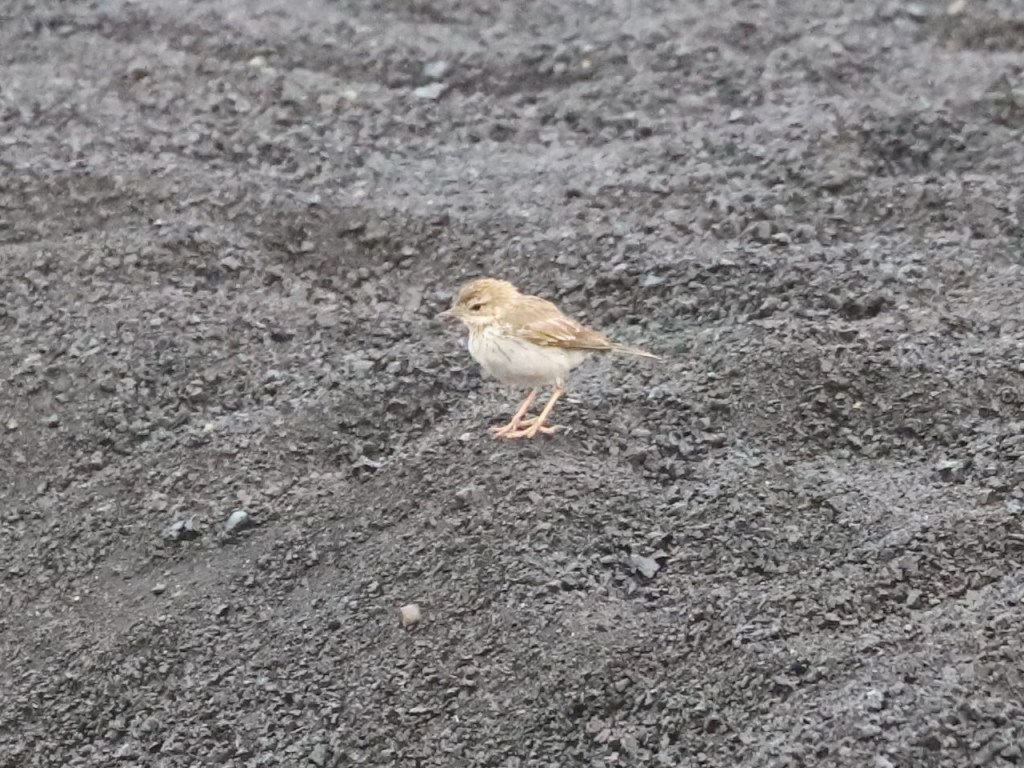
The next day our friends took a ferry to lounge on the soft beaches of Fuerteventura (the lottery robber wasn’t totally off in his hasty thinking), while my husband and I went on an expedition with Carmen Portella. She is the director of Eco-Insider (eco-insider.com), a team of experts on the biology of Lanzarote. Carmen took the two of us on a bouncy ride to check out the local flora and fowl in an empty area northeast of Yaiza. The birds are all out there, she assured as, as we strained our eyes peering out the window of the jeep. We couldn’t help being a bit skeptical as we scanned the sand lying around us. What would the birds eat? Every living thing’s gotta eat. This island was clearly a really rough neck of the woods, metaphorically speaking.

But not all animals are picky and some even make do with spiky, spindly weeds and whatever lives on them. And many go out of their way to blend in, as they say. More power to them all.


Don’t see much? Let me help you out.


Our energetic, affable guide also explained the difficulties of living on a piece of land with barely any precipitation that is very far removed from the nation it is part of. Water (desalinized), schools, healthcare were at the top of her list. But she also helped us understand how on earth wine is produced locally and why Lanzarote doesn’t have monster hotels.
The vineyards first.

After ash from the volcanic eruptions in the 18th century smothered wide swaths of land on Lanzarote, it was then discovered that the new soil had its advantages. So the desert was made to bloom in a most unlikely way. Opportunity indeed. Stone ‘cups’ protect the vines from the wind and hold the dew in. What a sight to see, but not a bad drink to quaff either, I must say.
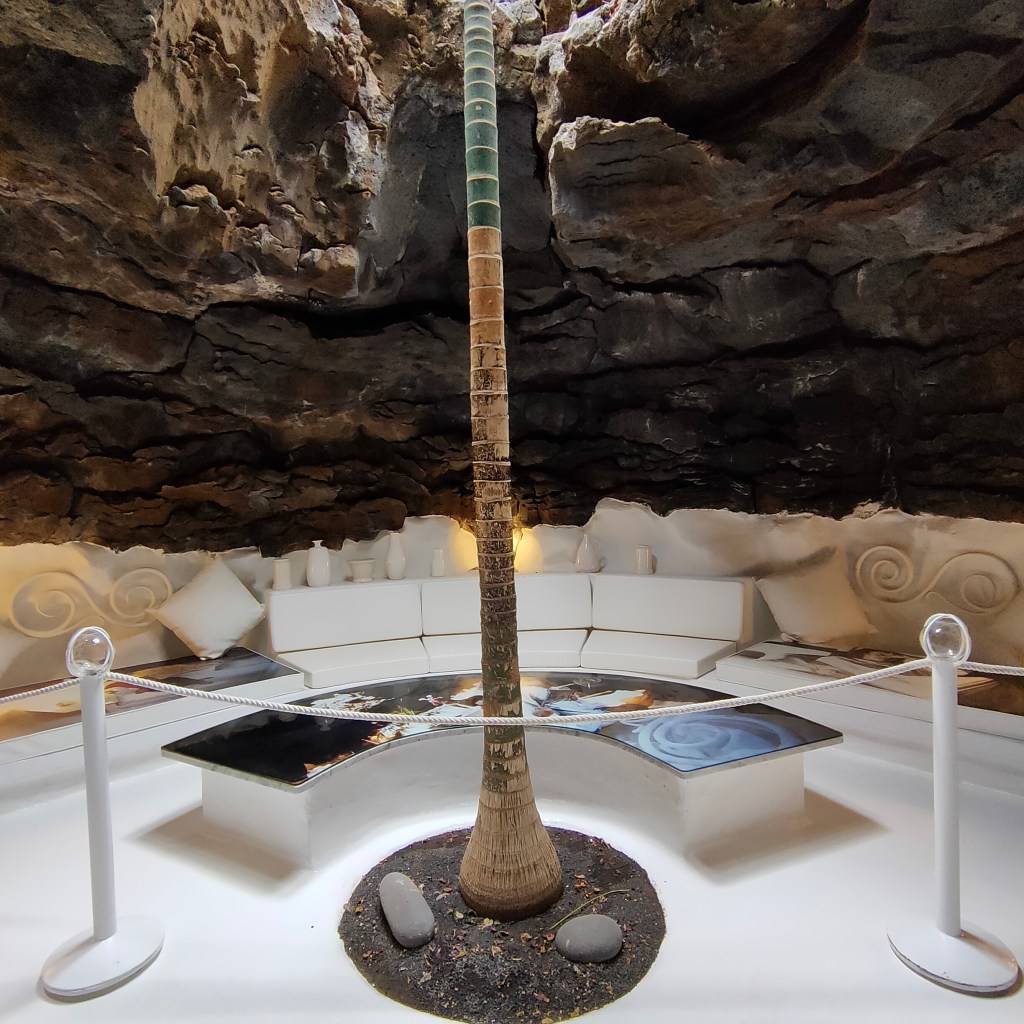
Vegetation of all sorts also fascinated native son Cesar Manrique. He had something in common with the ingenious birds and plants. Or was he inspired by a benevolent god who decided to take an interest in a forlorn isle? An artist, sculptor, architect and urban planner, Manrique was more than unfazed by the barrenness of his birthplace. As a matter of fact, after he returned to Lanzarote from a career abroad, he started to exploit those rocks and tough Canarian palms and cacti. He focused on trying to bring people and their environment together. The most fascinating places in Lanzarote, apart from the craters, and beaches, which I still haven’t mentioned, are the houses, gardens and other natural features Manrique fashioned into slightly treacherous oases. Just don’t hit your head on the wall or fall on a plant or into the water lining the corridor. Stay on your toes even while relaxing. Remember the sleeping Lady Macbeth and Medea.



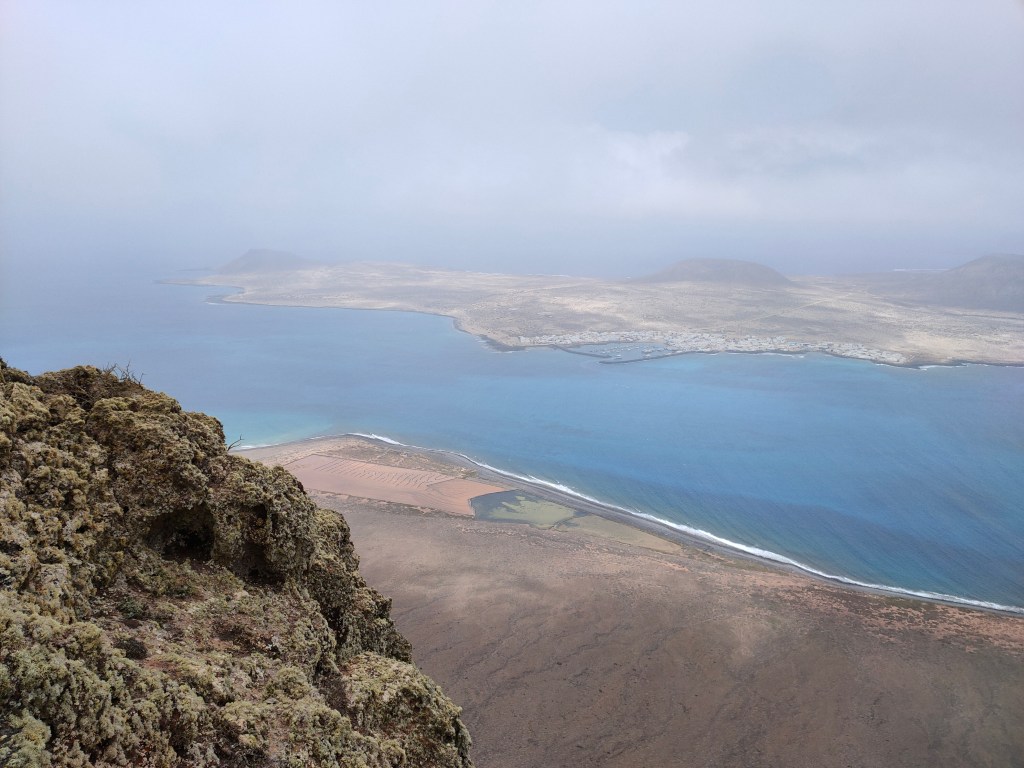
One last thing before I go. The beaches, right? Well, let me make up for completely omitting them so far by revealing the ones I liked best. I saved them for last because they’re not actually on Lanzarote! Now there is a tiny island to the north called La Graciosa. Graceful and pretty, and undeveloped. Not only are there no highrises, there aren’t even any paved roads. You take a boat from Orzola, on the northern part of Lanzarote and cross a rough channel to this modest little outcropping where you can hike, cycle or take a bone-rattling jeep ride to circumnavigate it. And then lie on a towel and take in the scenery. There is, of course, a volcano even on the little sister islet.
Right now, these islands seem to be living in their fortunate phase. Not godforsaken. It’s all relative, of course.














 I Love Rambling